Hearts and Roses: A Designer’s Real-World Review
As someone who’s stitched hundreds of designs across apparel, home goods, and boutique merchandise—and who’s turned down more than a few “cute” embroidery files after one disastrous test run—I approached Hearts and Roses with quiet curiosity. Not hype. Not hope. Just attention. I’d just landed a small-batch order for personalized linen pillow covers for a local wedding planner’s client—soft, neutral tones, delicate but intentional details—and needed something that felt romantic without veering into cliché. Hearts and Roses was my shortlist. Here’s what I found after testing it on cotton-linen blend, midweight sweatshirt fleece, and even a curved baby onesie.
A First Impression That Stays Honest
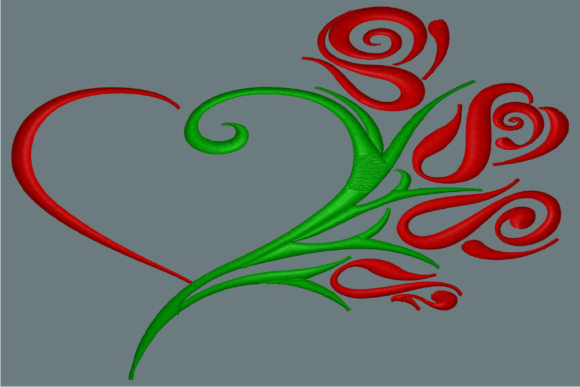
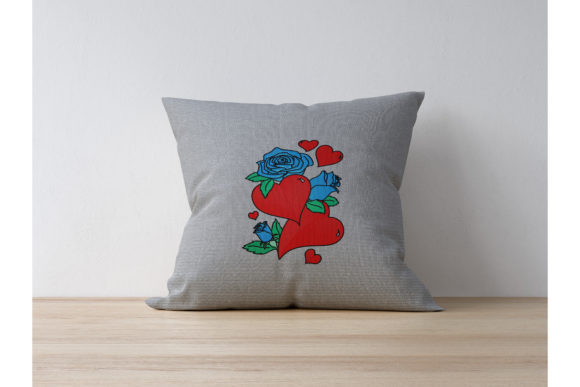
Opening the file feels like unrolling a sketchbook page: clean, balanced, and intentionally spare. This isn’t a dense floral explosion—it’s an Outline Flowers design, built around confident, flowing lines. The hearts nestle gently between rose stems, not stacked or competing, but conversing. There’s rhythm in the curve of each petal, weight in the heart contours, and breathing room between elements. It reads as handmade—not because it’s rough, but because it’s *considered*. You can tell it was digitized by hand: no robotic symmetry, no over-engineered corners. It has warmth. And that matters—especially when your finished product lands in someone’s hands as a wedding gift or new-baby keepsake.
Where Hearts and Roses Truly Shines (and Where It Asks for Care)
I stitched Hearts and Roses across six real projects last month: a canvas tote for a florist’s pop-up, a crewneck sweatshirt for a teen’s birthday, a tea towel set for a bridal shower, and three variations on baby onesies (cotton interlock, bamboo jersey, and organic cotton knit). The results were consistently strong—but only when I matched the design to the right context.
- Best fit: Pillow covers, lightweight aprons, structured tote bags, and smooth-knit sweatshirts. On these, the outline style reads clearly, the stitch density stays manageable, and the design holds its shape through washing and wear.
- Use thoughtfully: Stretchy fabrics (like thin jersey tees) and highly textured surfaces (terry cloth towels, bouclé knits) need extra stabilizer—and a test run. The fine lines in the rose stems can blur if tension or stabilizer isn’t dialed in.
- Not ideal for: Tiny hoops under 4”, curved cap fronts, or ultra-thin fabrics like silk charmeuse. The design’s grace comes from its scale and flow—not miniaturization.
What Customers Actually Notice (and Why It Matters)
Here’s the quiet truth: buyers don’t read digitizing notes. They feel intention. When a customer sees Hearts and Roses on a linen pillow cover, they register softness, care, and time—not thread count or file format. That perception lifts perceived value. I’ve watched clients pause longer over this design in mockups than over busier alternatives. It doesn’t shout. It invites. That’s gold for Etsy sellers curating a cohesive shop aesthetic—or craft fair vendors building trust through understated quality.
For small business owners, Hearts and Roses works as both a standalone piece and a subtle brand accent. Stitch it small on the hem of a chef’s apron, or large and centered on a boutique’s custom sweatshirt—it adapts without losing identity. And because it’s built for clarity over complexity, it photographs well in natural light—critical for printable mockups and social listings where first impressions happen in under two seconds.
Practical Notes Every Embroidery Designer Should Keep Handy
This isn’t just about stitching—it’s about delivering confidence, consistency, and craft integrity. So before you load Hearts and Roses into your machine or list it in your digital shop, ask yourself:
- Did I test it on scrap fabric matching my final project? Especially important for textured or stretchy substrates.
- Does my thread color contrast enough on both light and dark backgrounds? Outline designs rely on edge definition—low-contrast combos (e.g., light gray on oatmeal) can vanish.
- Is my stabilizer appropriate? Tear-away works beautifully on stable wovens; cut-away adds security on knits. Skip the “lightweight” claim unless you’ve verified it.
- Have I checked small details at actual size? Those tiny heart centers and petal tips must hold up at your chosen size—no guessing.
- Does the licensing allow commercial use? Since Hearts and Roses is marketed for pillows, t-shirts, and sweatshirts, confirm whether resale of finished items or digital redistribution is permitted—don’t assume.
Final Thought: A Design That Earns Its Place
Hearts and Roses won’t dominate a busy festival booth or scream from a crowded Etsy grid. But it will earn repeat orders from customers who value quiet elegance, thoughtful detail, and the kind of handmade authenticity that doesn’t need filters or captions to land. It’s the embroidery equivalent of a perfectly tailored sleeve—a detail that doesn’t draw attention to itself, but makes everything else feel more considered.
If you’re building a craft business rooted in quality over quantity, personalizing gifts that carry emotional weight, or selecting machine embroidery design assets that reflect your brand’s voice—not just its inventory—then Hearts and Roses is worth your time. Not as filler. Not as trend bait. But as a trusted, versatile, quietly confident tool in your creative kit.