Daisy Flowers Embroidery Review
First Impressions: Light, Lively, and Unmistakably Handmade
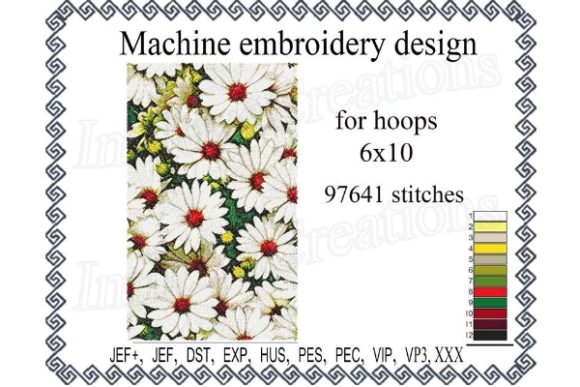
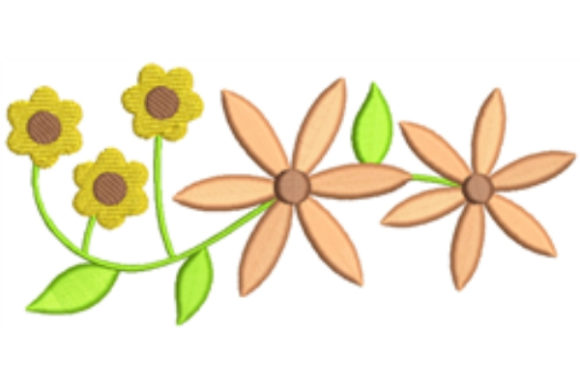
As a designer who’s stitched over 300 boutique apparel drops—from linen tees to heavyweight hoodies—I opened Daisy Flowers expecting charm. What I found was more: a quietly confident machine embroidery design that balances botanical softness with crisp execution. The layout feels intentional—not overcrowded, not sparse—just enough daisies to suggest abundance without sacrificing breathability. Petals have gentle curvature, stems flow with subtle asymmetry, and the overall composition reads as organic, not rigid. That’s critical for sweatshirt embroidery: stiff or overly dense designs fight fabric drape; Daisy Flowers invites it.
How Daisy Flowers Performs Across Real Sweatshirt Scenarios
This isn’t just a “pretty design”—it’s a versatile design asset built for real production decisions. On a natural heather grey sweatshirt? It shines with quiet elegance—ideal for minimalist boutique branding. On charcoal or navy fabric, the contrast lifts effortlessly when paired with ecru or pale yellow thread colors—no bleeding, no muddiness. Pastel sweatshirts (think blush, mint, or buttercream) let Daisy Flowers read as sweet but never saccharine; the stitching personality stays grounded, not cutesy.
Oversized hoodies? Yes—it holds presence on chest placement without overwhelming proportion. A single daisy cluster at the left chest reads refined; scaled slightly larger for back placement, it becomes a signature moment—soft, memorable, photo-ready. For sleeve accents? Trimmed versions work beautifully near the cuff or shoulder seam—especially for seasonal collections (spring launches, garden party merch, cozy autumn layers). And because it lives in the Bouquets category, it pairs intuitively with other floral embroidery files—think lavender sprigs or wild rose buds—for cohesive design systems.
Design Integrity Meets Commercial Practicality
Let’s talk durability and detail. As a commercial embroidery designer, I assess every file for wash resilience, stitch density, and fabric compatibility before approving it for client production. Daisy Flowers strikes a smart balance: fine enough to read clearly at 3.5"–4.5" chest placement, yet robust enough to avoid fraying or thread pull after repeated laundering. The petal edges aren’t razor-thin—they’re stitched with slight tapering and thoughtful underlay, which helps them hold shape on textured fabrics like fleece-backed cotton or French terry.
Fabric thickness matters—and Daisy Flowers adapts. On lightweight sweatshirts, a medium-weight tear-away stabilizer keeps puckering at bay. On denser, brushed-back hoodies? Switch to cut-away + light fusible for long-term stability. Thread color contrast is where this design truly earns its keep: even on dark fabric, it avoids heavy fill saturation—so you retain soft hand-feel and avoid that stiff, plasticky finish that undermines premium handmade product perception.
Hoop Size & Placement Flexibility
The original Daisy Flowers embroidery file appears optimized for standard 4x4 hoops—ideal for chest logos and sleeve details. That’s a win for small shop product consistency: no special hoops required, no re-hooping delays during batch production. For back designs or oversized placements, confirm whether a larger hoop version exists—but even scaled up, the design maintains clarity. No tiny stamens or fragile filigree that vanish at distance. What you see in your printable mockup is what your customer sees in lifestyle product photography.
Brand Impact: More Than Just a Design
For Etsy sellers and small clothing brands, every stitch carries brand weight. Daisy Flowers doesn’t shout—it resonates. It signals care, femininity with strength, and approachable artistry. That builds buyer trust: when customers scroll your shop and land on a sweatshirt with Daisy Flowers embroidered cleanly at the chest, they don’t just see decoration—they register intention. They sense craftsmanship. They imagine wearing it comfortably, photographing it thoughtfully, sharing it authentically.
That visual recognition compounds across touchpoints. Your Instagram feed gains cohesion. Your packaging insert feels curated. Your digital embroidery file becomes part of a recognizable aesthetic—part of your design assets, not just a one-off download. And because it’s rooted in nature but rendered with modern restraint, it avoids trend fatigue. This isn’t fast-fashion embroidery—it’s slow, considered, boutique-brand embroidery.
What You Should Verify Before Production
The product description confirms Daisy Flowers is a high-quality embroidery ready for your next sewing project—and that’s promising. But as a working designer, I always recommend verifying three things before cutting fabric:
- Hoop size and format compatibility: Confirm your embroidery machine supports the file type (e.g., PES, DST, EXP) and that the native hoop size matches your workflow.
- Stitch count and density: While not listed, lower-density designs (<7,000–9,000 stitches) typically perform best on knits and sweatshirts—minimizing stiffness and maximizing comfort.
- Licensing scope: If you’re producing for resale (not personal use), ensure the digital embroidery file includes commercial embroidery rights—especially important for Etsy sellers and custom apparel businesses.
Final Thoughts for Creative Entrepreneurs
Daisy Flowers isn’t flashy—but it’s faithful. Faithful to fabric, to function, and to the quiet confidence small shop owners build stitch by stitch. It works for the craftsperson embroidering five hoodies in their garage studio and the small team running weekly drops from a shared creative space. It elevates a basic sweatshirt into something tactile, intentional, and emotionally resonant.
If your brand values handmade presentation over mass-produced polish—if your customers respond to warmth, authenticity, and botanical simplicity—then Daisy Flowers isn’t just an embroidery file. It’s a quiet differentiator. A signature whisper in thread. A reason someone chooses your small shop product over the algorithm-suggested alternative.
Use it thoughtfully. Pair it with intentional thread colors. Photograph it in natural light. Let it breathe on the fabric. And watch how often customers ask, “Where did you get that design?”—because with Daisy Flowers, the answer becomes part of your story.