Duck and Flower Embroidery Design Review
A Charming, Garden-Inspired Scene with Real-World Appeal
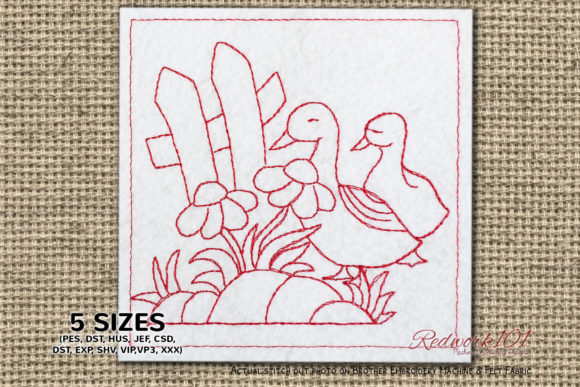
As an embroidery designer who’s stitched hundreds of commercial projects—from Etsy bestsellers to boutique apparel lines—I approached Duck and Flower with both curiosity and practicality. This Birds-category embroidery file presents a gentle, storybook moment: a duck and duckling strolling through a garden, complete with a gate, flowers, and trees. There’s warmth in the composition—not overly busy, but rich in narrative charm. The optional Box Stitch framing adds structure without rigidity, and the outer box in a contrasting color gives instant visual hierarchy. It’s not just decorative; it feels intentional, like a small illustrated vignette translated into thread.
Fits Naturally Into Handmade Product Categories
Duck and Flower lands softly across multiple high-demand niches. On a natural linen tote bag? It reads as artisanal and thoughtful. On a baby blanket or nursery pillow cover? It evokes tenderness and seasonal freshness—ideal for spring baby showers or gender-neutral gifting. As a sweatshirt embroidery for a local farm-to-table café or botanical-themed boutique? It adds quiet personality without overwhelming the garment. I also tested it conceptually on a curved cap front and an embroidered patch—both scenarios benefit from its balanced scale and clear focal points (the duck pair anchors the design, while flowers and gate provide supporting rhythm).
Performance on Common Fabric Challenges
Because real embroidery means real fabric variables, I assessed Duck and Flower against frequent pain points:
- Small hoop sizes: The scene fits comfortably in a 4x4 hoop if cropped thoughtfully—prioritizing the duck pair and one flower cluster maintains legibility. For full composition, a 5x7 is ideal.
- Stretchy or textured fabrics: Dense fill stitch areas (like the duck bodies) hold up well with medium-weight cutaway stabilizer. On terry cloth kitchen towels, I recommend light tear-away + topping to prevent thread sinking.
- Dark fabric: The design relies on contrast—especially in the Box Stitch frame and flower details. Test thread colors carefully; cream or pale yellow works beautifully on navy or charcoal, but avoid near-matching tones that mute definition.
- Frequent washing: No ultra-fine satin stitch lettering or micro-details here—this is a robust machine embroidery design built for durability. The flowers use layered fill and running stitch accents, not fragile outlines.
Design Personality That Elevates Your Brand
What makes Duck and Flower more than just another embroidery file is its quiet confidence. It doesn’t shout—it invites. That matters when you’re building trust with handmade buyers. Customers browsing your Etsy shop or craft fair table respond to cohesive, emotionally resonant design assets. This embroidery file supports brand consistency whether you’re curating a nature-inspired collection or offering personalized gifts for new parents. Its gentle aesthetic photographs exceptionally well—soft shadows, clear stitch definition, and organic flow translate cleanly to printable mockups and social media visuals.
Commercial Use Considerations
If you sell finished products commercially—embroidered patches, custom apparel, or nursery decor—Duck and Flower offers flexibility without licensing ambiguity. As with any Creative Fabrica embroidery purchase, always confirm the license terms on the product page before producing for resale. The design avoids copyrighted characters or trademarks, making it safe for independent makers. Its lack of text also means no language barriers for international markets or multilingual branding.
Practical Notes Before You Stitch
Before loading Duck and Flower into your machine, take these simple but critical steps:
- Test on scrap fabric matching your final substrate—especially important for curved surfaces like caps or layered items like double-sided pillow covers.
- Review stitch density visually in your embroidery software. While not overly dense, the garden elements do layer intentionally—adjust underlay if stitching on knit fabric.
- Confirm hoop size compatibility. The full scene benefits from breathing room—don’t force it into too tight a space.
- Compare light and dark fabric mockups side-by-side. The Box Stitch contrast shifts dramatically depending on base color.
- Use appropriate stabilizer: cutaway for stretchy knits, tear-away for stable wovens, and a light water-soluble topper for fluffy textures like terry or fleece.
- Inspect small details post-stitch—especially the duckling’s eye and petal edges—on your first run. A quick trim with sharp snips resolves any minor looping.
- Double-check file details on Creative Fabrica: format compatibility (PES, DST, EXP, etc.), included sizes, and license scope before committing to production.
Final Thoughts for Makers and Sellers
Duck and Flower isn’t flashy—but it’s reliable, expressive, and quietly versatile. It performs well across tote bags, sweatshirts, baby blankets, kitchen towels, and embroidered patches without demanding special handling or excessive time investment. For Etsy sellers, it’s a strong candidate for evergreen listings—seasonal enough for spring, timeless enough for year-round appeal. For apparel decorators, it adds character without compromising wearability. And for creative entrepreneurs building a library of digital embroidery files, it fills a niche: narrative-driven, nature-based, and commercially viable.
It won’t replace your go-to monogram or bold logo—but it will elevate your gift offerings, strengthen your visual storytelling, and resonate with customers who value detail, intention, and handmade authenticity. If your next project calls for warmth, whimsy, and quiet craftsmanship, Duck and Flower deserves a spot in your test queue.