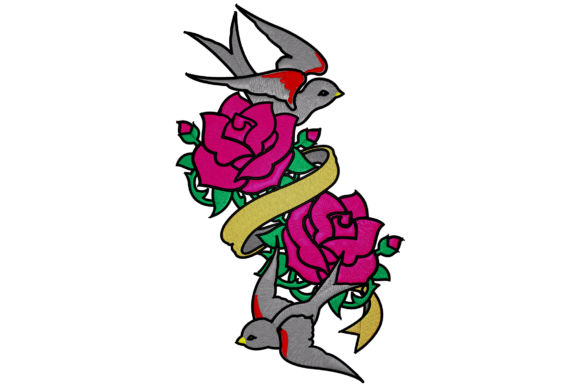
Roses and Swallow Embroidery
First Impression: Romantic, Timeless, and Quietly Bold
As an embroidery designer who’s prepped over 200 craft fair booths—and shipped thousands of digital embroidery files to Etsy sellers and boutique makers—I’ll say this upfront: Roses and Swallow Embroidery lands with quiet confidence. It’s not loud or trendy; it’s romantic, balanced, and deeply wearable. The pairing of roses (soft, layered, botanical) with a swallow (graceful, airborne, symbolic) creates a gentle contrast—feminine but not fussy, nostalgic but not dated. Customers browsing a handmade market stall don’t stop for clutter. They pause for harmony. And this design delivers exactly that.
Where It Shines: Craft Fair Product Realities
In my booth setup—featuring embroidered tote bags, linen aprons, organic cotton tea towels, canvas pouches, and pillow covers—Roses and Swallow Embroidery consistently draws attention on three key items:
- Tote bag design: Placed just below the handle seam on natural canvas, it reads as elegant yet approachable—ideal for shoppers seeking “thoughtful handmade,” not mass-produced flair.
- Apron embroidery: Centered above the pocket, it softens utilitarian fabric with poetic detail. Buyers associate it with care, craftsmanship, and kitchen heirlooms—not just function.
- Pillow cover: At medium size (4–5 inches wide), the design fills visual space without overwhelming. It feels intentional, giftable, and display-ready on a shelf or couch.
It also works beautifully as an embroidered patch—especially when backed with iron-on adhesive and offered in a set of three. Crafters love that. So do Etsy sellers bundling with fabric kits.
What Doesn’t Work (And Why)
This isn’t a one-size-fits-all machine embroidery design. On curved surfaces like baseball caps, the swallow’s wingtip or rose petal edges can distort if hooping isn’t precise—so I recommend skipping caps unless you’re using a cap frame and testing thoroughly. Likewise, dense stitch areas (like the rose center or swallow’s chest feathering) may flatten or pucker on thick, textured towels unless paired with cutaway stabilizer and reduced density in your editing software.
Small sizes (<3 inches) risk losing definition—especially the swallow’s delicate tail fork and the subtle veining in rose petals. If you’re listing Roses and Swallow Embroidery as a small shop product for baby onesies or wristlet pouches, test at 2.5" first. What looks crisp in a digital preview rarely survives stitching on knit fabric or low-thread-count cotton.
Photography, Listings, and Online Appeal
This design photographs exceptionally well—especially on light, matte fabrics. Its balance of line and fill gives strong contrast for Etsy listings and printable mockups. Unlike busy, high-density motifs, Roses and Swallow Embroidery reads clearly even in thumbnail size. That’s gold for scroll-heavy platforms. Pair it with neutral backdrops (linen, raw wood, slate) and natural light, and your product shots will convey handmade quality without needing text overlays.
For digital sellers: highlight the five available sizes in your description. Buyers appreciate flexibility—they’ll use the smallest for patches and the largest for wall hangings or quilt blocks. Mention “digitized by hand” prominently. That phrase signals care, intention, and premium positioning—critical for customers comparing $8 vs. $22 embroidery files.
Production Practicality: Batch-Friendly but Detail-Aware
Yes, Roses and Swallow Embroidery is repeatable for batch production—but only if you respect its nuances. Stitch density is moderate, not aggressive, which helps with thread tension consistency across machines. Still, always run a test on scrap fabric matching your final product’s weight and texture. Check thread contrast: pale pink rose + navy swallow on oatmeal linen? Gorgeous. Same combo on charcoal terry cloth? Muddy. Adjust thread colors before loading fifty hoops.
Hoop size matters. Confirm what’s required for each size—especially the largest. Some versions may need a 6x10 hoop or larger, which limits compatibility with entry-level machines. If you’re selling commercial embroidery services, clarify licensing terms early. The description says “digital files available”—but does it include commercial use? Always verify before stitching for resale.
Booth Impact and Buyer Engagement
At a craft fair, visual rhythm wins. Too many bold fonts, too many florals, too much neon—it all blurs. Roses and Swallow Embroidery stands out precisely because it *doesn’t* shout. It invites leaning in. I’ve watched customers trace the swallow’s flight path with their fingers, comment on the rose’s soft gradient, and ask, “Is this your original design?” That’s engagement you can’t fake.
It also strengthens brand consistency. If your small shop product line leans rustic-modern, botanical, or slow-living, this design anchors your aesthetic without repeating the same motif. Use it on tea towel sets, then shift to minimalist blackwork swallows on pouches—same family, fresh expression.
Designer Notes You Can’t Skip
Before cutting your first production run:
- Test the embroidery file on scrap fabric matching your final product’s weight, weave, and stretch.
- Check thread contrast—especially on dark or textured fabric. A single color change can lift the whole design.
- Review spacing between elements. Roses and swallow must breathe; tight crowding kills elegance.
- Confirm hoop size requirements for each of the five sizes. Don’t assume compatibility.
- Inspect stitch density in high-detail zones—the rose center and swallow’s wing feathers are where puckering hides.
- Use the right stabilizer: tear-away for smooth cottons, cutaway for knits or towels, and lightweight fusible for patches.
- Create at least one real mockup—not just a digital render. See how light hits the stitches in person.
- Compare fabric colors side-by-side. Linen, canvas, and quilting cotton reflect thread differently.
- Verify commercial licensing status. If reselling finished products, you need explicit permission—not just “for personal use.”
Roses and Swallow Embroidery isn’t flashy—but in the handmade marketplace, authenticity, balance, and quiet intentionality sell faster than novelty. It’s a birds embroidery design that feels human, not algorithmic. And for craft fair sellers, Etsy sellers, and small shop owners building trust one stitch at a time? That’s everything.