Fire Daisies: A Craft Fair-Ready Embroidery Design
First Impression: Bold, Bright, and Unmistakably Handmade
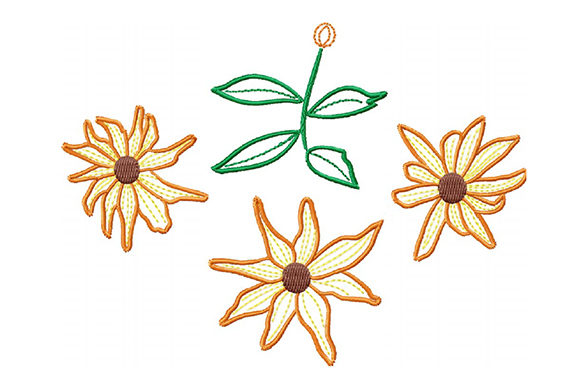
As an embroidery designer who’s prepped over 200 craft fair booths—from snowy holiday markets to sun-drenched summer fairs—I opened Fire Daisies expecting floral charm. What I got was something sharper: a design that balances playful energy with quiet symbolism. The name alone signals warmth and contrast—“fire” adds urgency and vibrancy; “daisies” grounds it in innocence and sincerity. It reads as modern-farmhouse meets boutique botanical: not overly delicate, not aggressively trendy, but emotionally resonant. That duality is gold for handmade sellers. Customers pause longer at designs that feel both familiar and freshly styled—and Fire Daisies delivers that pause.
Where Fire Daisies Shines on Real Craft Fair Products
This isn’t just another bouquet-themed embroidery file—it’s a versatile visual anchor. On a natural canvas tote bag, Fire Daisies pops without shouting; the lightweight stitch structure keeps the fabric soft and drape-friendly. As an apron embroidery, it lands perfectly above the pocket—large enough to read from three feet away, detailed enough to invite closer inspection. For tea towel embroidery, its open layout avoids overcrowding textured terry or waffle weave, letting the flower forms breathe. And on structured items like caps or small fabric pouches? It scales down cleanly when digitized with intentional spacing—no lost petals, no muddy centers.
As an embroidered patch, Fire Daisies holds up beautifully on denim jackets, linen market bags, and even baby bibs—its symbolic meaning (“love, innocence”) quietly elevates gifting appeal. Pillow covers benefit most: the design feels intentional, not decorative filler. When grouped with neutral linens, Fire Daisies becomes a subtle signature—not branding, but belonging.
Selling Strengths You Can’t Fake
Fire Daisies works hard for your booth. It photographs well under natural light—no excessive fill stitches to glare or flatten. Its clean outlines translate smoothly into printable mockups for Etsy listings, social previews, and wholesale lookbooks. More importantly, it feels repeatable: whether you’re stitching 5 or 50 units, consistency stays high because the design avoids micro-details that unravel across machines or operators. That reliability means less rework, faster turnaround, and more confidence when pricing your handmade product.
It also strengthens brand consistency. If your shop leans rustic-modern, botanical, or heartfelt-gift-focused, Fire Daisies reinforces that voice without needing explanation. At a crowded fair, where attention spans are measured in seconds, this design earns recognition fast—then rewards lingering with texture, balance, and meaning.
Careful-Use Notes Every Embroiderer Should Know
- Dense stitch areas: Though described as “lightweight,” verify stitch density before scaling up. Overly tight fills on dark fabric may cause puckering—especially on stretchy knits or thin cotton poplin.
- Tiny details: If the original embroidery file includes fine stamen lines or petal veining, test those on textured tea towels and curved cap surfaces—they can vanish or distort.
- Small lettering: The description cuts off mid-sentence (“innocence, p…”), so confirm whether any text is included—and if so, whether it’s legible at 1.5” height on patches or aprons.
- Fabric considerations: Avoid heavy stabilizer layers on lightweight fabrics—Fire Daisies’s strength lies in its softness. For thick terrycloth or fuzzy sherpa, use cutaway stabilizer and reduce top thread tension slightly.
- Dark fabric: Thread contrast matters. Test metallic gold or rust-red against charcoal or navy—some fire-toned threads dull on deep backgrounds unless paired with matte white underlay.
- Small-size clarity: Below 2.5”, simplify or omit inner details. This design’s charm lives in proportion—don’t shrink it into abstraction.
Practical Designer Notes Before You Stitch
Before committing to your craft fair run, do these five things:
- Test the machine embroidery design on scrap fabric matching your final product—same weight, same finish, same wash history.
- Check thread colors against 3–4 fabric swatches (cream, oat, charcoal, rust) to see how warmth shifts visually.
- Review spacing between elements—if petals or stems abut edges, adjust for hoop size and seam allowances on tote bags or pillow covers.
- Inspect stitch density and layer order: too many underlays on lightweight fabric = stiffness; too few on textured towels = poor definition.
- Create at least one real mockup—not digital, not printed—stitched, pressed, and displayed beside similar products. Does Fire Daisies hold its own?
Final Thought: Why Fire Daisies Fits Your Business Right Now
This isn’t just another digital embroidery file. Fire Daisies is a quiet differentiator—a design that supports your story instead of competing with it. It fits seamlessly into bouquets of handmade goods without looking generic. It invites conversation (“What kind of daisy is that?”), builds emotional connection (“My mom loved daisies”), and reinforces perceived value (“This feels special, not mass-produced”). For Etsy sellers, it’s searchable *and* scroll-stopping. For small shop owners, it’s batch-friendly *and* boutique-worthy. For craft fair sellers, it’s booth-ready *and* memory-making.
Just remember: every great handmade product starts with intention—not just inspiration. So check your commercial embroidery license before selling finished products, confirm file compatibility with your machine, and always, always stitch a sample first. Because when your customer picks up that embroidered tea towel and smiles, you want that moment to be rooted in care—not compromise.